Antonini Wines Featured at West Shore Cafe: Wine Educator George Foote Presents!

There is absolutely no place on the West Shore of Lake Tahoe that is a beautiful and elegant as The West Shore Café in Homewood. Thus it’s appropriate that they launched their winemaker dinners with beautiful and elegant wines. The Antinori wines presented in the USA in partnership with Ste Michelle Wine Estates provided a wide range of tasting experience and the chance for West Shore’s Executive Chef William “Rusty” Johns to show off his art.

George Foote, the Maryland-based and well-known National Wine Educator, was there courtesy of Ste Michelle to share stories of these Antinori wines.

Marchese Piero Antinori, the 26th generation of his family to sell wine, took the reins of the company in 1966. Somewhat of a renegade, he challenged the Italian authorities on their categorization of wines, and forged ahead with production of highly consumable food-friendly wines at affordable price points. Wines from Tuscany boomed. Now, in this generation, the three daughters of Piero Antinori are continuing the tradition of consistent excellence. This is one of the 10 oldest wine families in the world!

The Sangiovese “Santa Cristina”, Antinori, Tuscany 2009 was originally introduced in 1946 as a Chianti Classico by Piero Antinori’s father. Technically, this wine is a Super Tuscan, although it is not marketed as such. Primarily Sangiovese, it is blended with 10 percent merlot, and new in the 2009 vintage, 5 percent Cabernet. It’s a modern style Tuscan red wine, ready to be consumed, and it is referred to as “italy’s Favorite Wine.” Ruby red in color, the aroma is intense with cherry and raspberry fruit, hints of violet and toast too. It’s a very smooth wine, with soft tannins that are controlled and delicious, and a nice finish. 13 percent alcohol. $12 the bottle. Local distributor Southern Wine & Spirits is a believer in this wine, so in addition to being available at West Shore Café, Dockside 700 in Tahoe City also sells it by-the-glass and bottle. Chef Rusty paired it with Cioppino. Perfect.

The Tignanello, Tuscany, Antinori, IGT, Tuscany 2007 is a legendary Super Tuscan. The winery has focused on Sangiovese clones for years to improve this variety, and lets the fruit express itself through careful blending practices. This is the wine that singled-handedly altered the Italian wine laws, courtesy of the stubbornness and wisdom of Piero Antinori, allowing special wines from all regions throughout Italy to be produced in the new category IGT. The Tignanello is 80 percent Sangiovese and 15% Cabernet, with 5% Cabernet Franc added for balance. It is an intense ruby red, with aroma of ripe fruit and spice, vanilla and toast. Richly textured, the structure is complex and flavors are long and persistent with hints of chocolate, huckleberry and black plum on the finish. Tannins are managed well with this wine, and it is truly elegant. 14% alcohol. $100 the bottle. Paired delightfully with Chef Rusty’s T-bone steak prepared Italian style.

The Marchese Antinori Vin Santo 2006, Tuscany, DOCG , comes only in 500 ml bottles. Made in Tuscany since the medieval times, it maybe have been used during Mass. Antinori Vin Santo uses Malvasia and Trebbiano grapes from the Antinori estates in the Chianti region. Air dried in a loft and then pressed after several months, a long slow fermentation takes place over three years. The result is a bright yellow amber-hued dessert wine, with hints of honey and dried fruit. 15-16 percent alcohol. $42 the 500 ml bottle. The dessert pairing was an apple/pear tart.

The West Shore Café & Inn is on the lakefront adjacent to Homewood Mountain Resort. Phone 530 525 5200 for reservations. More information at www.WestShoreCafe.com

Harvest Report: Oman in Arabia

Since it was near the end of the harvest in the Sierra Foothills, I decided to switch reporting locale and travel to Arabia – Oman, to be specific.


First, it is important to note that no wine grapes are harvested in Oman, nor are there any wineries. This is a Moslem country. But for the thirsty tourist, almost all hotels set aside Koranic law for us infidels and offer a wine list where you can get a vastly overpriced (and sometimes heat-cooked) bottle of French, Australian, Chilean or South African wine, or, for about 3 to 6 Omani Rial (at 2.6 US dollars to the OMR) a glass of a varietal called “red wine” or “white wine.” I seem to recall that the English have a term for these varietals, and it is “plonk”.

daily life in Muscat
This was a big eye-opener for me, fresh from the reports of great Zins and Syrahs that will result from the 2011 harvest in the Sierra Foothills. I was looking forward to some great Moscato. I mean, Muscat Oman must have something to do with Muscat or Moscato wines. You’d think.

Sadly, I informed my grown sons by email via the 1-rial-an-hour hotel business center computers that since wine was so expensive, I would not be buying any souvenirs, not even the frankincense for which Oman is famous, and would instead devote a ceramic made-to-look-old pot of OMR to the search for a decent glass of wine. This search continues.. but I have great weekend plans for the bar at the Al Bustan, the Ritz Carlton property in Muscat.

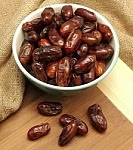
Actually, I think the best bet for a local winemaking industry in Oman would be for a date-based wine. Dates are everywhere here, with 35,000 hectares of land planted with date palms throughout the Sultanate, and there are 40-odd varieties grown in the Nizwa region of Oman alone and that’s just one growing area. There is even an historical date-crush process in place. A few hundred years ago when Omani mud-brick walled cities and forts were under siege, the protectors would rush to the date storage rooms, where bags of dates had been laid layer upon layer several meters high on three sides of the room, starting with a platform raised about 18 inches and slightly cantilevered toward the twoinside corners. Date juice would emanate naturally from the weight of the heaped dates, and be collected in ceramic pots strategically placed at those corners.


Nizwa Fort stairs
 This is where the Omanis made a grevious winemaking error. Instead of contacting Scott Labs, Lallemand, Chr.Hansen etc for the latest date-juice-fermenting yeast, they HEATED UP the date juice and poured it through slats in their fortress steps as invaders were rushing up the lower steps. Kind of like tarring and feathering, but without the feathers. It seems to have worked, since Oman stayed independent and continued its dhow building and trading even to modern times. Today most of the export trade is in oil, natural gas, copper and aluminium.

There’s a real opportunity to increase their balance of payments with a date wine industry, I think. Wake up, Your Majesty, the world awaits Omani date wine!

(Note to self, next time buy wine at duty free before getting on the plane to Muscat).

El Dorado Wineries and Big Band Jazz: Charity Event at Lake Tahoe

The autumn colors at Sugar Pine Point State park are spectacular right now, so don’t be shy: go. Pack a picnic, take a bottle of wine and some of those great plastic wine glasses, a blanket, and enjoy. If you need some wine suggestions, look for some of the wines noted below. They were contributed to a tasting event in late August, when the park featured a night of Big Band Jazz and wines from a number of El Dorado wineries. If you can’t find those wines in your nearby wine shop, remember that El Dorado wineries are a mere daytrip away from Tahoe in the Sierra Foothills.

Lava Cap, located near Placerville, contributed a 2009 Reserve Chardonnay. This lovely rich and creamy chardonnay has aroma of toasty oak, apple and vanilla. The velvet mouth feel comes from Burgundy aging techniques and barrel fermentation in separate lots which were then blended. Winemaker Tom Jones handcrafts this wine. It’s won several awards. 14.9 per cent alcohol, $18 bottle.

The 2010 Sauvignon Blanc from Boeger Winery, near Placerville, is an estate wine produced from grapes in their own vineyards. It is a crisp Sauvignon Blanc with a lingering finish and yet is delicate on the palate. Aroma of grapefruit, peach and nectarine. 14.5 per cent alcohol. $14 bottle.

Latcham’s El Dorado Gold Rush White is a nicely blended table wine that hails from their winery in the Fair Play/Mt Aukum area of El Dorado County. This is a blend of Chardonnay, Pinot Grigio, and Pinot Blanc that has both a refreshing crisp fruit flavor and a hint of sweetness. $12.50 bottle.

Jazz Band at Twilight, Lake Tahoe
shoreline at Sugar Pine Point State Park 

Holly’s Hill 2009 Patriarche Blanc is a blend of 50% Roussane, 25% Grenache, and 25% Viognier. “A beautiful floral perfume of orange zest with lemon/lime and melon. In the mouth the wine has a great viscous mouthfeel with a long finish,” notes the winemaker. Holly’s Hill Winery, located just south of Placerville at 2700 feet elevation in the Pleasant Valley region, is a small family winery that produces only Rhone varietals. $25 bottle.

Mount Aukum Winery, located in Somerset, contributed its Petite Syrah 2007 Fair Play. With grapes grown in its own 2615-foot elevation vineyards as well as grapes sourced from other vineyards nearby, winemaker Michel Prod’hon is a great fan of Rhone varietals. This Petite Syrah has aroma of vanilla and exotic spices. “This wine is rich and bold with flavors of blackberry, pepper, and hint of toasted nuts. Drink it now with a hearty meal, or lay it down for several years and let the tannins soften,” says the winemaker’s notes It has won many gold medals, including one in the 2011 San Francisco Chronicle winetasting. 15.5 per cent alcohol, $35 bottle.

Perry Creek, located in the Fair Play AVA of El Dorado county, contributed its 2008 Zinfandel, the Zinman. “ZINMAN is one of Perry Creek’s most recognized and highly successful signature series wines. It is rated among the top 15 best-value Zinfandels by Wine Spectator in 2010 and its popularity continues to grow year by year. What makes it so special is the unique combination of spice and elegance in its flavors which stems from being produced in one of the best vineyards in the El Dorado County AVA,” notes the website. 14.9 per cent alcohol, $14 bottle. More information at www.perrycreek.com

These civic-minded wineries contributed other wines from their production; all were outstanding Sierra Foothill wines. The Big Band event was a fundraiser to benefit the West Shore Association. In addition to the wineries, other contributors to this event were the California State Parks, the North Lake Tahoe Resort Association, and the Tahoe City Public Utilities District.

~~~~~~~~~~
copyright 2011 Barbara Keck

Barbara writes the Wine Adventures column about the wine business for The Tahoe Weekly newspaper.   She is currently gathering information for iphone app on  Sierra Foothills Wineries, to be available in late Spring 2012 through the Sutro World offerings on itunes/Apple app store.

Wine Touring in the Sierra Foothills: Avanguardia, Nevada City: "Hedonic Wines"

The winding road to Avanguardia – Bitney Springs Road, bridge over Deer Creek, Newtown Road, to Jones Bar Road, look for the sign – takes you to an in-winery tasting room that is charmingly set in the midst of cases of wine, bottling machines and winemaking equipment. The sign that finally points in the direction of this purpose-built winery near Nevada City could say “varietal-free zone ahead” and that would tip you off that you are in for an other-worldly wine tasting experience.

Rob Chrisman is dedicated to making wines that provide a maximum sensory pleasure to the wine drinker. He refers to his style of winemaking as “hedonic blending”. Rob has a healthy disregard for the traditional California approach to winemaking, and is carving out a brave new world with his wines. His scrumptious wines have fanciful names, and are handcrafted with an avant-garde flair, You are in for a new taste experience!

Rob’s path to his winemaking philosophy began when he was a computer programmer in Los Angeles. Like many of us, he began his wine drinking career by trying to get bottles of wine on the cheap, and he refined his palate that way. In 1977, he visited the Foundation Plant Materials Service group at University of California – Davis. This independent arm of the university protects, preserves and distributes disease-free plant material, particularly grapes. From the list of 60 or 80 wine varieties available, Rob selected 29 varieties for his experimental vineyard in Tulare.

After many years as a grape grower of the experimental kind, and an avid home winemaker, Rob moved his family to Nevada County in 1990. He had a hunch he could grow grapes quite well on his site at 2500-foot elevation.

“I believed that Sierra Foothill wines could be as good as those from any area, and we planted vines in 2000 and 2001 on 3 ½ acres here.” Now, Avanguardia Wines blends over twenty Italian, Russian, French and University of California-created crosses grown in its estate vineyards. “Many of the grape varieties have been imported by the University especially for us and are available nowhere else, outside of Europe.” To his own estate-grown grapes, he adds other Sierra Foothills fruit. He started to produce cutting-edge blends, and they’ve found a loyal following.

“I call my winery a varietal-free zone because we don’t produce traditional chardonnay, zinfandel and so on. Although several of my wines could be considered varietals because they contain enough of one varietal to be termed that, instead we chose to give them fanciful names,” he said.

Rob sincerely believes that blending is the way to go to get the best quality, tastiest wines. “I do non-traditional blending, what I call “hedonic blending”, because I am looking for the maximum sensory pleasure out of the wine. I want to produce wines that are extremely food friendly.” His wines are not high alcohol, nor are they fruit-bombs. Subtle oak and good acidity are key. He produces 1000 cases of wine each year, and 90% of the grapes in those wines come from his estate vineyards in Nevada County.

A chat about the names of his wines is informative and entertaining. Premiato means “prizewinner”. Sanginet is a 14th century archaic name for Sangiovese. Ampio means ample, generous; Cristallo means crystal. Selvatico is actually an adjective about an Italian wine characteristic that is used to describe a wild berry or undomesticated flavor. Due Fiori…two flowers.

Looking for a daytrip to Sierra Foothill wine county? Head to Avanguardia’s winery at 13028 Jones Bar Road, Nevada City, CA 95959, open Saturday and Sunday 12-5. There’s also a tasting room in Grass Valley at 209 W. Main Street that’s open daily 12-5. More information? http://www.avanguardiawines.com/


~~~~~
Copyright 2011 Barbara Keck

Barbara Keck is now working on iPhone and Droid apps on Wineries of the Sierra Foothills

Harvest time in the Sierra Foothills, time for visits! Suggestion: Solune WineGrowers in Grass Valley

 
“The reward for a daytrip to Sierra Foothill wineries is intense flavorful wines from passionate winemakers” ~ Barbara Keck


Andrea & Jacques Mercier
It’s Harvest Time in the Sierra Foothills, and if you’ve been following my Harvest Report blogs on the MountainHighWines blogpages, you know that the late spring and cool summer are manifesting in a later harvest than usual. It’s a good time right now to take a trip to some of those wineries you’ve been wanting to visit. Suggestion: Solune WineGrowers in Grass Valley (Nevada County).

Not every winemaker has the advantage of bringing the world’s “best practices” to his winemaking. Jacques Mercier of Solune Winegrowers has done that, thanks to an extensive background as a trained sommelier and an esteemed wine judge. From tasting and judging wines around the world – Spain, the Douro, Mendoza, Switzerland, France – he’s gathered wisdom from observation and from other wine judges who are winemakers. The result: award winning wines from his own vineyard and winery.

Jacques and wife Andrea bought their property in Grass Valley in 2001: 15 acres with a house, barn, a 3 acre vineyard in place and another 7 acres that could be planted to vines. “We decided to name our winery Solune, which is a combination of the French words for sun (soleil) ad moon (lune),” explained Jacques.

At 2600 foot elevations where many of his vines grow, he knows that every little valley has its own microclimate. Initially, Jacques planted 24 varieties and at the end of his first decade, he has 11 reliable varieties.

Jacques’ winemaking style is very hands-on. He has an East Coast palate, and fine tunes every wine he makes. “I pay careful attention to the acidity,” he says. “I think that a lot of California wine is too flabby. I make careful decisions about when to harvest; I pick my grapes to give my wines a smooth yet rich quality.”

At 1500 cases now, he wants to keep small in order to keep quality high. Jacques is looking forward to a 50/50 ratio of juice from his own estate vineyards and grapes that he buys in from selected Foothill growers. “If I don’t like my own wines, I’ll throw it out. I can’t hype anything. Solune will produce good wine, smooth wine, great food wine,” he said.

What to taste? Last season when I was tasting at Solune, I had a wonderful Port. I don’t see it for sale on their website now, but ask about it. Try these:

The 2008 Barbera, Sierra Foothills, has intense red berry flavors and aromas, great balance, silky texture, long finish, and this vintage is unoaked, with a hint of smokiness due to the 2008 forest fires. $25 the bottle.

The 2007 Fleur de Lune, Sierra Foothills, is an off-dry blend that combines Muscat Blanc, Orange Muscat and Gewurztraminer. I like the touch of sweetness, which Jacques notes is perfectly balanced by a vibrant acidity, providing a refreshing finish. $20 the bottle.

The 2006 Cinq Etoiles, Sierra Foothills, is a classic five-varietal Bordeaux blend. The website has a great description: Cabernet Sauvignon leads the flavor profile with black currant and plum, Petit Verdot adds color and structure, and the Merlot smooths the texture and brings spicy flavors and a hint of tobacco leaf. Cabernet Franc brightens the nose with a whiff of flowers and the Malbec helps to fill the mid-palate with a fruity lushness. $20 the bottle.

Solune is located at 16303 Jewett Lane (Colfax Hwy), Grass Valley. Open for tastings Saturday & Sunday from 12 to 5. If you want to visit during the week, call 530-271-0990 and perhaps they can arrange a time.

Sierra Foothill Wine Region- Hotbed of Wine Experimentation

Walking amongst the 14 El Dorado winery tasting stands in South Lake Tahoe, I hailed my friend and mentor, John MacCready of Sierra Vista Winery, Placerville. Under a canopy on Ski Run Way in the early September sun, he poured his fine wines, wife Barbara at his side. Yes, he admitted modestly, he had a role in encouraging this first-ever "Sample the Sierra" event. But of course, that is typical of John, who after all was one of the pioneers of winemaking in the Sierra foothills.

You can read about John on other of my blogposts, but he deserves accolades for another great vintage of fine wines. The 2010 Viognier has a medium straw color with lovely fragrances of honeysuckle, rose petals and citrus blossoms. Tastes of peaches and apricots are balanced with a rich texture and a bright level of acidity. 13.7 per cent alcohol, $18 the bottle.

The Sierra foothill wine region is a hotbed of wine experimentation. For example, Brian Bumgarner of Bumgarner Winery, Camino, poured wonderful Barbera sourced from Placerville’s Stone Vineyard from a tap in a wooden box. Normally I am an all-natural cork gal, but I was surprised at how fresh this wine tasted. Because of the packaging format, however, you can only taste the Barbera in his tasting room on his Silver Fork label and packaged in a refillable 750 ml wine bottle. “Bring your clean bottles back and get a credit on your next purchase. This is sustainable wine making in practice at your local winery! “ Brian noted. Brian poured other nice wines, and these you can buy by the bottle. The Bumgarner 2008 Pinot Noir has an aroma of strawberry and rose petal, s nose redolent of strawberry with subtle rose petal. You can also get a bit of smokiness from this wine; remember those forest fires that put some haze in the region in 2008? 14.1 per cent alcohol, $27 the bottle.

Always a pleasure to meet a female winemaker, and Debbie Knutzon of Synapse Wines, Placerville, is a molecular biologist by background. This accounts for the Synapse Wines logo: a junction of two nerve cells – a metaphor for family and friends coming together. Debbie learned winemaking by shadowing an experienced local winemaker, none other than John MacCready! She poured what she notes is their flagship wine, the 2006 Kspace Resonance Syrah, a deep rich syrah with mild blackberry and spice flavors. It’s won many Gold Medal awards! 14.5 per cent alcohol, $28 the bottle.

Lava Cap, Placerville, poured its 2007 Merlot Reserve, which recently won the Best of Class award in the San Francisco Chronicle Wine Competition. It’s a medium-tannin wine, with structured ripe cherry notes, green apple, chocolate, and a nice clean balance to it. 14.8 per cent alcohol, $20 the bottle.

Shadow Ranch Winery, Fair Play, poured its 2008 Zinfandel. With a deep ruby color, and aroma of raspberry and cherry, this wine has a medium-full body, a nice tangy acidity and good depth. The finish has a hint of spice and a nice tannic structure. 14.5 per cent alcohol, $20 the bottle.

Jodar Vineyards & Winery, Placerville, poured its 2006 Cabernet Sauvignon. Aroma of black cherry and plum with toasty oak, vanilla and spice. Brown spice of clove, colarm, cedar on the finish. 13.7% alcohol, $22 the bottle.

Other El Dorado wineries pouring were Crystal Basin Cellars, Colibri Ridge Winery & Vineyard, Latcham Vineyards, Gold Hill Winery, DK Cellars, David Girard Vineyards, Madrona Vineyards, and Auriga Wine.

A great event, and I plan to go every year! Watch for it at www.samplethesierra.com or http://www.tahoechamber.org/.

~ ~ ~ ~ ~ ~

© 2011 Barbara Keck


For more information on dining and the wide range of activities around Lake Tahoe, see the online version of The Tahoe Weekly. This article appeared in my column "Wine Adventures" in September 2011.

Research in Process for Book on : "Mountain High Wine: The Sierra and Its Foothills".

Art and Wine Go Together

Andy Skaff at Wolfdale's,
enjoying wine, showing
his plein air works
Art and wine just seem to go together. I see art in tasting rooms and wine festivals everywhere. My son Martin is the proud curator of an original Andy Skaff, and so naturally we attended the reception for plein air painter Andy Skaff at Wolfdale’s Restaurant in Tahoe City recently. While there, I tasted through Wolfdale’s nice wine-by-the-glass offerings, and asked Skaff why he thought art and wine were so integrally linked.

Andy paints outdoors
in his Tahoma studio
at Lake Tahoe
“There’s clearly a lifestyle connection ,” he said. “Consumers who appreciate a glass of wine also are consumers who appreciate the arts. I like to show my paintings in an atmosphere of fine wine and food, because just like wines are flavorful and nuanced, my paintings are pungent and saturated with color.” He paints with intent and concentration every day, and often has a glass of wine at 5 o’clock. “If I’m still painting then, it’s fine. If I am drinking a glass of hearty red wine, it will put me in a winter or fall frame of mind. If a pinot grigio, then I think of a hot summer day.”


High August Clouds

For Andy, the Sorelle Bronca Prosecco di Valdobbiandene DOCG Italy, brings to mind his work “High August Clouds.” “ A warm summer day, a nice bubbly wine, a good day doing hiking or painting or whatever you love to do … this is a wine I’d enjoy then,” he said. This Prosecco is a light sparkler, an extra dry wine from the Veneto region of northeast Italy. Prosecco grapes are blended with a small amount of Perera, Verdiso and Bianchetta grapes, all indigenous to the Veneto region. Straw yellow in color, bright flavors of pear, nectarine, vanilla and almond. A long satisfying finish. $9 a glass.


Late Summer Start
(Barbara Keck's fav!)
 The Campagrande 2010 Orvieto Classico DOC Italy matches the mood of Skaff’s “Late Summer Start”. In this work, there are yellow tones in the emergent leaves and the nearby meadow. “I remember a fresh green scent as I did this painting,” said Skaff. The wine itself is yellowish with green highlights, and aromas recall flowers, pineapple, banana. Fresh and fragrant, savory and soft, pleasurable and easy to drink. 12 percent alcohol. $8 a glass.


The best-selling red wines on Wolfdale’s wine by the glass list are two fruit-forward California wines.

River Blues III
Skaff’s work “River Blues III”, one of his favorite works of the last three months, is a perfect pairing with the Steven Vincent 2009 Pinot Noir. “This is a Pinot Noir painting. I use considerable deep burgundy in this work, and the reflections in the water on this part of the Truckee near River Ranch during late afternoon in the summer show high summer colors.” This Pinot Noir is a beautiful dark ruby color, with tastes of blackberry, clove, cinnamon. Beautifully balanced with 50/50 grapes from Sonoma and the Central Coast, resulting in soft tannins. 14.2 percent alcohol, $9 the glass.

October Morning Light
An all time favorite for many, The Prisoner from winemaker Orin Swift, has a predominance of Zinfandel. The taste and aroma bring to mind a winter theme, says Skaff, and so his “October Morning Light” work is evoked.

“This painting is the richest painting I have on display at Wolfdale’s; it is very pungent, back lit and intense.” The Prisoner is a deep ruby-hued wine, almost opaque, with aroma and taste of black current, cherry, cassis and dark blackberry. It’s a massive wine on so many scales…at 15.2 percent alcohol, this yummy blend is deceptively easy to drink, so go slow. $15 the glass.

Through January 2012, Andy Skaff’s art is on display (and for sale) at Wolfdale’s, 640 North Lake Boulevard, Tahoe City. (530) 583-5700. You can also see Skaff’s work on his website at www.askaff.com.

~ ~ ~ ~ ~ ~

© 2011 Barbara Keck

For more information on dining and the wide range of activities around Lake Tahoe, see the online version of The Tahoe Weekly. This article appeared in my column "Wine Adventures" in September 2011.