Showing posts with label WineTime-Tahoe Weekly column. Show all posts

Sauvigon Blanc from Around the World


It’s not like we really need a special day to enjoy Sauvignon Blanc, but the wine industry designated one recently.   And so we gathered an interesting selection of Sauvignon Blanc from various wine regions of the world, and proceeded to taste them. 

I started with a Sancerre,  which has long been my favorite white wine with fish.  It pairs so magnificently with New England lobster that I can’t imagine going to Boston and having lobster there without a bottle of Sancerre at the table. 

The Sancerre I chose is the Domaine de la Perriere Sancerre 2013, produced by Saget La Perrier, a leading premium winery in the Loire Valley of France.  Managed now for 9 generations of Saget family owners,  currently the brothers Jean-Louis Saget and Christian Saget were brought up in the vineyards and learned to respect the soil and the vines from a young age.   Their love is reflected in this Sancerre.

This is a dry white wine with flowery fruit flavors that linger for a long time on the palate, and the characteristic minerality that defines most Sauvignon Blanc, along with a somewhat grassy aroma.  12.5 percent alcohol.  Suggested retail price is $24.99.

Next up, the Dashwood Sauvignon Blanc 2013 hails from from New Zealand’s Marlborough region, where the winds whip through the valleys each day and where towering mountains frame the vineyards.  Dashwood produces wines that are certified as sustainably grown, in vineyards in the Awatere and Wairau sub-regions of Marlborough.  This Sauvignon Blanc has an incredible aroma and a wonderful structure.  The fruit flavor is bright and fresh and zesty.  You’ll taste stone fruit like apple and pear, citrus, and some tropical flavors too.  13 percent alcohol.  Suggested retail price is $14.99

Casablanca, Chile, is the next wine region for our Sauvignon Blanc Day celebration.  The Los Vascos Sauvignon Blanc 2013 is a result of the vision of Domaines Barons de Rothschild (Lafite) to expand their estate by growing in South America.  Los Vascos was the first French viticultural investment in modern Chile.

This is a very fine wine at a very moderate price.  The Los Vascos Sauvignon Blanc is lively and refreshing with a perfect balance of fruit and acidity.  The spring and early summer of 2013 were cold in Casablanca, and the resulting late harvest yielded very aromatic grapes. The winemaker chose to express these remarkable aromas in this wine, and the bouquet is of lemon,  grapefruit and exotic fruit, with an aroma we don’t often get in other Sauvignon Blancs: boxwood.  Really scrumptious.  13 percent alcohol.  Suggest retail price of $13.99.  Grab some for the summer.  You won’t regret it.


This information appeared in the June 12 issue of The Tahoe Weekly, in myWine Time column

Garagiste Wineries - Featuring Dubost Ranch of Paso Robles


Kate Dubost in the Tasting Room
What is a garagiste winery?  The term often refers to folks who make wines in their garages, as they begin winemaking.  There is also a growing movement in California, primarily based in the Paso Robles area, of garagiste wineries.  The website californiagaragistes.com says this:  “GARAGISTES – (gar-uh-zhē-stuh) n, Fr. – A term originally used in the Bordeaux region of France to denigrate renegade small-lot wine makers, sometimes working in their garage, who refused to follow the “rules.” Now a full-fledged movement responsible for making some of the best wine in the world.”

I visited a Paso Robles garagiste winery, Dubost Ranch.  With production capacity now of 1200 cases a year, winemaker Zachary Raines along with owner Kate Dubost (also known as “Mom”) have produced an impressive array of wines since their first vintage in 2003.  All wines are hand bottled, hand corked and hand-foiled.  Talk about a labor of love!
 
 
The tasting room - cool place on a hot day!


One of the interesting aspects of Dubost Ranch winery is their commitment to being as sustainable as possible.  The building housing the barrels, equipment, and tasting room is built of bales of rice straw.  This provides a natural insulation, important in the Paso Robles area where the days are hot and the nights are cool.  This temperature variation, however challenging from the storage point of view, makes for great grape growing conditions!


The Dubost 2009 Crianza, Paso Robles, is a blend of 20% Grenache, 40% Tempranillo and 40% Syrah.  “Think of it this way,” said Kate.  “It’s Iberian Peninsula meets the Rhone…but with a bit more acidic tones.”  The aroma is of dried fruit and vanilla, with a subtle hint of oak.  Taste is clean and refreshing, with a nice fruitiness and that acidity for balance.  104 cases produced.  13 percent alcohol. $25 the bottle. 

Their newest release is the 2010 Estate Cuvee.  This Cuvee, of which only 70 cases were produced, is a blend of 34% Syrah, 33% Petite Verdot, and 33% Malbec.  The color of deep garnet gives you an inkling that the aroma will be heady, with cedar, anise, vanilla, cherry cola and a hint of mint.   This wine has a big body, with well developed tannins and a sweet lingering finish.  All fruit was sourced from Dubost’s own vineyards.  16.5 percent alcohol.  $45 the bottle. 

The 2009 Reserva, made with fruit from Starr Ranch Vineyard, Paso Robles, is a fairly tannic wine blended from Syrah and Tempranillo.  Carbonic maceration led to aromatics of coffee and lavender, and a taste of dark fruit and rich oak.  150 cases produced.  17.4 percent alcohol. $40 the bottle.

I also enjoyed their 2010 Carmenere, their Rose, and the 2009 Homestead Red.  Descriptions and prices are on the website, www.dubostwine.com and they’ll gladly ship to you.  Or visit them at 9988 Chimney Rock Road, Paso Robles.  Call for hours 805-226-8463.


Freckles, the Dubost Winery cat

 
This appeared in June 2014 in my Wine Time column in The Tahoe Weekly
Wine Country Wedding


June is a wedding time of year, and the younger generation of 20-and-30-somethings plans many of their weddings at wineries.  Apart from the main event, winery weddings provide an aspect that everyone enjoys: wine tastings and drinking.

My first experience of a wine country wedding was a few weeks ago when the Canadian side of my family decided that all available Taylors should come to my second cousin Kevin’s wedding at the Vintage Inn in Yountville.  It was great fun!  And, at 6 p.m. in mid-June, there was still plenty of sunshine. 


I’d never heard of One Hope Wines, but when the wedding toasts noted the bride’s extensive volunteer work, it all made a lot of sense.  One Hope is known for its give-back-to-charity policies and its website states “Every Bottle Makes an Impact”.  Half of wine sales profits go to charity.  Wine buyers can select the wine they most enjoy by varietal, or be guided by the cause which the varietal supports.  Check their website,
www.OneHopeWine.com for more detail.

 I enjoyed three wines, all nicely paired with hors d’oeuvres and dinner items.

The chilled sparkling wine, so appropriate for toasts and so welcome on a hot day, was the ONEHOPE California Brut Sparkling Wine.  French Colombard grapes provide the freshness and light color in this sparkler.  Aroma is of fresh green apples and nectarines, and the crisp taste of fresh fruit like peaches, sweet berries and pear stays nicely on the palate.  It is somewhat creamy, with refreshing bubbles.  11 percent alcohol.  $18.99 the bottle.  Half the profits are donated to end childhood hunger in America.


The 2011 ONEHOPE California Pinot Noir is hand-crafted by winemaker Rob Mondavi Jr.  Grapes are sourced from vineyards in Napa, Sonoma and the Central Coast of California.  There are intense strawberry and date flavors in this spicy yet lush-tasting wine.  These grapes had extended ripening on the vine, and then were aged in American Oak to give a nice tannin structure to the wine.  13.5 percent alcohol.  $18.99 the bottle.   Half the profits are donated to help pets find their forever home.

The 2009 ONEHOPE Santa Barbara Reserve Chardonnay has wonderful fruit aroma and a great balanced acidity.  There are accents in the aroma of citrus and stone-fruit such as nectarine and pear, and the taste features a hint of minerality along with apricot and apple flavors.  A creamy oak and some rich butter notes make a nice round finish.  14.2 percent alcohol.  $23.99 the bottle. Half the profits are donate to the Cure Alzheimer’s Fund.


The Vintage Inn lawn provides
a cool oasis for a June wine country wedding

This information appeared in The Tahoe Weekly column, Wine Time, in June 2014. 

Congrats to Kevin and Amanda!

First Class Wines, Ethiopian Airlines Selections


I had to beg and borrow air miles in order to upgrade my ticket to First Class for a recent trip I took to Ethiopia.  That journey is about 18 hours of in-air time, not including changing planes in Heathrow and hanging around San Francisco International for the obligatory 3-hour check-in time.  That’s my old-lady excuse, but another reason was that I wanted to taste the wines poured in First Class.

I must say, Ethiopian Airlines has a wine list of which they can be proud!  I’m not sure how many of these wines you’ll find in your local shops, but I’m sure they are available on the internet.  So, let’s travel First Class together in this column!  Disclosure: the tasting notes are provided by Ethiopian Airlines.

The 2012 Barton & Guestier Chateauneuf du Pape is from the vineyards situated in the Rhone Valley of France.  This brightly cherry-red colored wine is very aromatic, fruit driven (black cherry, prune) mixed with tobacco, liquorices and spicy notes.  It is soft and round, with remarkable ripe tannins and a long spicy aftertaste.  13.5 percent alcohol.

From South Africa, Boschendal Lanoy’s blend of Cabernet Sauvignon and Merlot is deep garnet in color.  This is a bold wine, a true South African Shiraz/Cabernet blend, and has luxurious fruit with aromas of cassis, pepper spice, liquorice and sage.  It is full bodied, elegant and complete with well-integrated wood and soft powdery tannins on the palate.  14 percent alcohol.


The 2008 Rioja Vega Reserva red wine from Spain is the typical Rioja blend of Tempranillo, Graciano and Mazuelo grapes.  Aged for 2 years in oak, it’s an elegant wine,  with wood and other intense aroma of ripe forest fruits and spice notes.  There’s a subtle toastiness, and a balsamic background.  The rich variety of fruit flavors with soft tannins and balanced acidity make for a very long and pleasant aftertaste.  13.4 percent alcohol.

The favorite of my First Class wines was the 2013 Palacio De Bornos Verdejo, a white wine made solely from the most expressive Spanish white grape variety:  Verdejo.  This wine has notes of green apple and pear along with scents of white flowers, herbs, and a pleasant hint of citrus.  The taste is broad, with an excellent acidity that adds freshness.  This Verdejo has a great personality, with a very long and spicy finish. 12.5 per cent alcohol.

Last, from the north of Burgundy, the 2012 Barton & Gustier Chablis. This white French wine has a golden straw-yellow color, a fine aroma of mineral tones mixed with dried fruits and nuts, and a wonderful white floral overtone.  It is round and creamy tasting, with a good acidity. 12.5 per cent alcohol.

By the way, Ethiopia was fantastic.  Rugged travel in the countryside, but worthwhile.


Church hewn from rock, level with the ground,
in Lalibella, Ethiopia
Tribeswoman from the Omo Valley
The famous angels from church in Gondar


This information appeared in the June 4, 2014 issue of The Tahoe Weekly, in my column "Wine Time"


The Wineries of Nevada County (California) Provide Exciting Tasting Opportunities


Spring has sprung, and tasting rooms are opening their doors a bit longer now.  There are many opportunities to taste the fine wines of the Sierra foothills, and some of the most interesting opportunities are less than an hour away.  The wineries of Nevada County beckon, and we were primed for more tastes by attending the Flavor of Nevada County event last fall.  Here are some of the yummy discoveries.


Avanguardia Rosata
I’ve always enjoyed the wines produced by Avanguardia, as winemaker Rob Chrisman so deftly blends over twenty Italian, Russian, and French varietals along with cross-varietals created by the  University of California, all grown in his estate vineyards..  


The Avanguardia 2012 Rosata “Cara Mia” is a Rose vinified in the style of Provence.   Rob makes his Rosata from Sangiovese and other red varieties,  vinified as if they were white wines. The small amount of residual sugar in this Rosata leaves a dry impression on the palate. 12.7 per cent alcohol, $16/bottle.  Visit Avanguardia at their tasting room at 13028 Jones Bar Road,  Nevada City, CA.  Call 530 274 8200 for hours.  www.avanguardiawines.com


Sierra Knolls Primitivo
Sierra Knolls Winery presents a 2011 Primitivo that is definitely worth tasting.   It has a bold rich flavor, and opens with bright notes of cherry and blackberry.  I like the taste of toasted almond and dark chocolate on the close. This Primitivo is  13.4 percent alcohol.  $24/bottle.   The Sierra Knolls Vineyard & Winery Tasting Room is open by appointment only on Saturdays and Sundays from 12-5pm. at 19635 Kingswood Court,  Grass Valley, or at their new and conveniently located tasting room "Bear River Wine Tasting" at 10024 Linnet Lane, Auburn.  Call 530 269-2327 for updates on hours   www.sierraknollswinery.com
 
 
Mrs Lucchesi pours at
Flavor Nevada County event
Lucchesi Winery produces its wines from its lovely southwest-facing estate vineyards in Grass Valley.   The beautiful views of the Sierra Nevada mountains enhance the taste of the wines when you enjoy the hospitality of their tasting room at the winery at 19698 View Forever Lane, which is open from 9:00 am to 5:00 pm, Monday through Friday, or weekends by appointments.  Or go to the downtown tasting room at 128 Mill Street, Grass Valley.  


Luchessi produces
white wines too...
I enjoy all the Lucchesi wines.  You might want to try the Lucchesi Masque  is a blended red wine made from Sierra Foothill grapes. It has fruity aromas of cherry creme brulee, mocha, and a hint of tobacco with a soft, fruity medium body and a jammy, nut accented finish.  14.8 percent alcohol, $12/bottle.  www.lucchesivineyards.com


Smith Vineyards Christina's Blush
(on the left)
Smith Vineyards produced a 2012  merlot dessert wine “Christina’s Blush” that was delicious.  It is light and fruity with aromas of rhubarb and strawberry with bright flavors of cherry leading to a fresh, clean finish.  13.5 percent alcohol, $16/bottle.  Try it at their tasting room at 142 Mill Street, Grass Valley.  530 273 7032.  www.smithvineyard.com


 This review was published in my May 2014 Wine Time column for The Tahoe Weekly

NEVADA WINE and the New Commercial Vineyard at UNR


Several years ago, I started following the progress of Dr. Grant Cramer of UNV-Reno as he encouraged the wine industry in Nevada via his classes and wine tastings.  There is now even more reason to get involved:  the new venture to build a commercial-scale vineyard at the Main Station Field Laboratory.

UNR’s College of Agriculture, Biotechnology and Natural Resources is providing the land, water and equipment, and a newly formed non-profit, Nevada Vines and Wines, is raising funds for vines, trellising and vineyard care.

The UNR program has been gaining momentum since 1995;  thirteen varietals of 90 vines each  have been successfully maintained to date at UNR’s experimental vineyard.  Wine made from these grapes is tasted twice-monthly.  To get a sense of what’s ahead for Nevada wine and the venture into a bigger vineyard, put a Tuesday tasting on your schedule. Contact Professor Cramer at cramer@unr.edu to get on the list for what’s-being-discussed-and-tasted.   Tastings are held at 5:30 p.m. at either the Greenhouse Complex on Valley Road at the UNR Field Station or at Studio on 4th, 432 E 4th St. and a small donation, usually $10 or $15, is requested to support the program.


Danny Hopper, UNR Student
If you are fortunate, you’ll run into some of the other movers-and-shakers behind the new commercial vineyard at the tastings, all of whom are enthusiastically involved in the Nevada Vines and Wines initiative.  Look for Professor Cramer’s students Ryan Ghan and Danny Hopper, and William Coplin, an avid local winemaker. 

The plan is for a 3-acre vineyard that will produce 10 to 15 tons and make upwards of 2000 cases of wine.  The ultimate goal is 7 acres that will produce 20 to 35 tons.  Both a Kickstarter campaign and an IndieGoGo campaign brought funds to the venture in the past few months.  One acre of 1800 Riesling vines has already been planted, and a grant from the Nevada Department of Agriculture is enabling a second acre of Lemberger grapes to be planted.  The crowd-sourced funds are earmarked for planting a third acre with 1500 Chardonnay vines, a trellis system, and tanks that will hold 400 gallons of juice.  The hope is for even more funding to buy Pinot Noir vines and additional wine making equipment.

The chances of building a good and reputable wine industry in Nevada are excellent.  Many factors come into play of course, but climate is an important one.  Northern Nevada’s climate is very similar to that of eastern Washington State.  The arid climate of Nevada means warm days, cool nights, and relatively disease and insect-free conditions. 

This is a wonderful opportunity for Tahoe-Reno wine lovers to add to the success of a nearby wine industry.  Contact the Nevada Vines and Wines organization by email at uncorkingnevada@gmail.com  to get on the list for updates.  See you at UNR on Tuesdays!
 
 
This information appeared in Wine Time, my Tahoe Weekly column, in April 2014
 

GET WELL WINES - What to Send to Cheer up a Friend


Ironstone, Baiocchi and Spellbound:
Wines to Cheer ANYONE up!
What a twist of fate!  To be recuperating from an operation and not to be able to enjoy the wines that friends sent as get-well wishes … agonizing.   But I am back in the tasting mode again, and I thought I’d share some information about the wines that arrived.  It’s impossible not to make friends with winemakers because they are such a friendly lot, and I thank them all for wishing me well. 

Ironstone Reserve Estate Grown 2012 Sierra Foothills Chardonnay is an elegant Chardonnay with concentrated flavors of tropical fruit, and a nuance of vanilla and ripe apple.   It is creamy and almost butterscotch on the finish, a flavor enhanced during 12 months in storage in Ironstone’s underground caverns carved from solid rock.  Grapes are sourced from Ironstone’s mountain vineyards at Hay Station Ranch in the Sierra Foothills, and the estate grown grapes used in this wine come from prime Chardonnay clusters that are hand selected for their outstanding quality.  14.5 percent alcohol.  $19.99  the bottle.  http://www.ironstonevineyards.com

Baiocchi Neophyte 2013 was born in Fair Play, El Dorado County, and is a delightful rose made from Grenache and Mouvedre.  Frankly, I hate to share this with anyone, because it is so delicious and drinkable. It has an aroma of strawberry blossom and dried herb, and taste of strawberry and sweet pink grapefruit. It’s a perfect summer wine.    14.3 percent alcohol.    www.baiocchiwines.com

Spellbound Cabernet Sauvignon 2012 California is a nicely balanced Cabernet created by Rob Mondavi Jr., who is a fourth generation Napa Valley Winemaker.  Rob notes that it has ”bold dark fruit flavors with a slight hint of oak and spice. Cedar and tobacco aromas complement integrated lively tannins.”  I first tasted it at a Presidio Bank event, and the bank sent a bottle to me.  This 2012 Spellbound has an intensity of flavors and a lush texture.  “It’s one of our shining stars,” Rob says.  13.5 percent alcohol.  $15.99 the bottle.  www.spellboundwines.com

 Hawks View 2012 La Baleine “The Whale”.  This scrumptious red wine is a blend of 70 % grapes from the Double Canyon Vineyards in Horse Heaven Hills, Washington State, 25% California Syrah from Garys’ Vineyard in the Santa Lucia Highlands, and 5% Oregon Pinot Gris from the estate vineyards of Hawks’ View in the Chehalem Mountains of the Willamette Valley, Oregon.  So many 2012 wines from the West Coast are good, as moderate weather meant good crops with peak grape ripeness and a well-calanced chemistry.  Adding the Pinot Gris was the winemaker’s inspiration and A. J. Kemp took a chance that resulted in a really tasty wine.  There are yummy notes of violet and fig, framed by cedar and peppercorn.  14.7 percent alcohol.  $50  the bottle.  www.hawksviewcellars.com
 
This appeared as a Wine Time column in The Tahoe Weekly in June 2014

Starting a Wine Tasting Group: a few tips courtesy Washington Wine Report


Six Steps for Starting a Wine Tasting Group

Summer is just around the corner, and with it many new wines from the 2013 vintage and earlier will be released. It’ll break most people’s budget to buy all the wines you might like to taste, so the obvious answer is: start a wine tasting group.

Ryan Messer, contributor to Washington Wine Report, wrote a blogpost with lots of great tips on how to do this. I’m sharing his wisdom with you. First answer these questions: who, what, when, where, why and how. Below are Ryan’s tips, somewhat abridged from his original blogpost, but I quote him:

  • 1. Who – Invite those who might be as passionate about wine, or learning as you. It’s probably not wise to invite both a wine novice and a self-proclaimed expert to the same group, but having a diversity of people with different interests and experiences can broaden the learning experience.

  •   2. What – Set some ground rules as to what you want to taste. Depending on who is involved, you may consider limits on a minimum or maximum price per bottle, how many bottles, etc. This is entirely up to you and what you want to get out of the group. I participated in one where we each brought a bottle of a particular varietal and had a suggested price limit.

  • 3. When – I’m a big fan of once a month and laying out the entire year in advance. When my current group formed, I was able to put in my calendar every event so I can plan around those days. I know the date, location, host, etc. And we also built in “off months”. December is too busy and July is vacation time so we scratched both. We also left April open for a group trip and January to include spouses or significant others.

  • 4. Where –Some choices: have each member host in their home, or restaurant of their choice. It’s good to move around so no one feels the burden of the entire group on a regular basis.

  • 5. Why – Pretty simple… to learn about and enjoy wine.

  • 6. How –There are no global right or wrong ways to set a group up. Some groups can have the same set group each month where others can be more fluid with different people coming in and out depending on availability. Some can pick particular themes to explore where others can leave it wide open. It’s up to you and the group.
Need more tips? Visit the blog at www.wawinereport.com and search for “six steps”. Oh, you might just include a bottle of Washington wine in your tastings, too.

Published in Wine Time column, The Tahoe Weekly, on April 9, 2014

South African Wines now more Readily Available in the USA

Five years ago, I went to South Africa to learn about South African wines on the spot.  From my efficiency apartment in downtown Stellenbosch, I was in a great position to visit the wine region of the Cape area.  So many good wines!   And sadly, at that time, so many of these good wines did not make it to the West Coast of the USA.   At that time, Sweden and the UK were the top countries to import these fine wines,  and the USA (in toto) was far down on the list.

This has changed.  You can now find many excellent South African wines in wine shops, and also on the wine lists of restaurants that take the time to offer their patrons a selection from the best wine regions of the world.

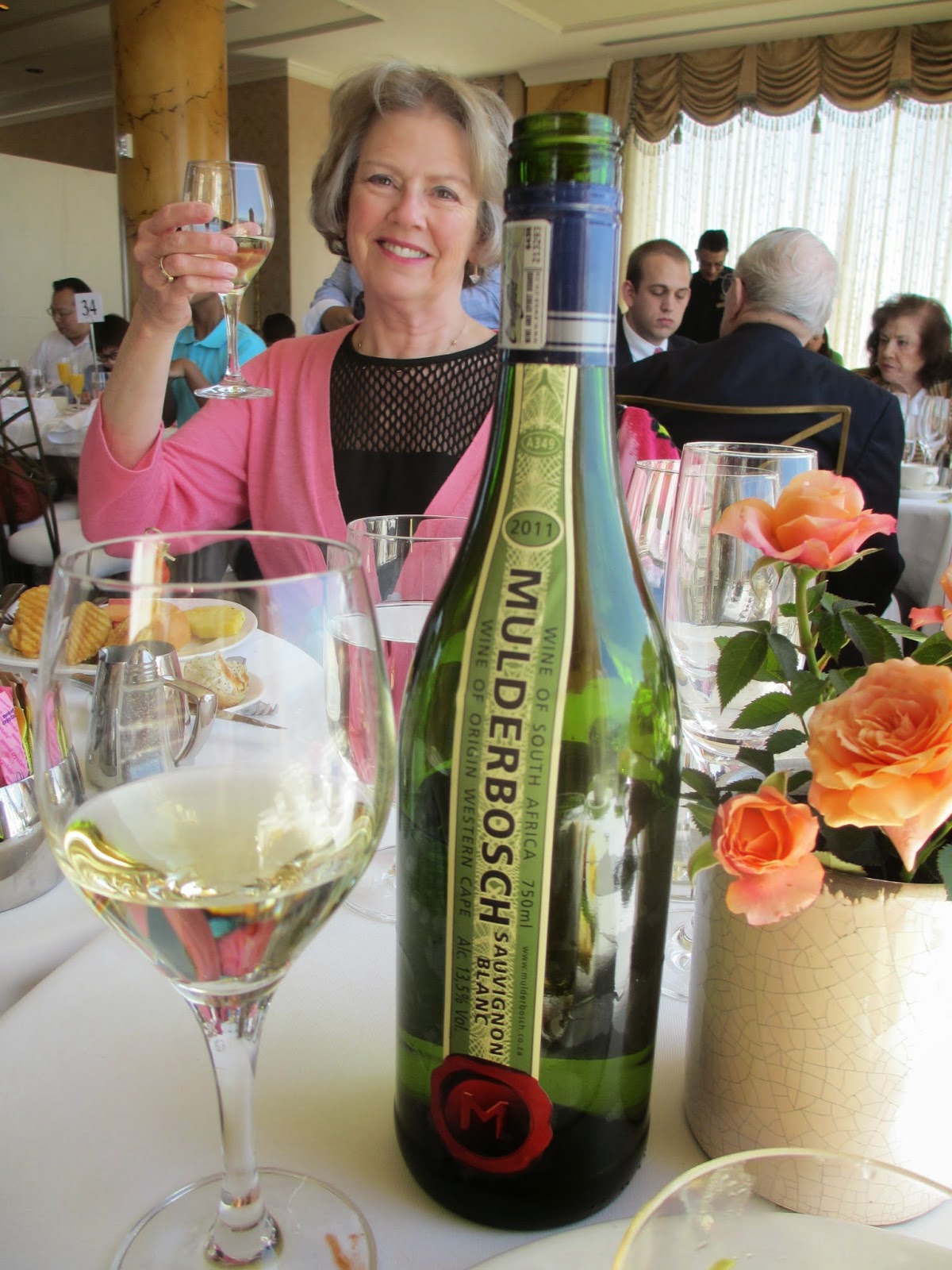
In May, I found enjoyment in three wines from a winery situated in the Stellenbosch Hills, Mulderbosch.  It's one of South Africa's finest producers.  All of their wines are in fairly wide distribution.

I started with the 2011 Mulderbosch Sauvignon Blanc, the wine that first built this winery's international reputation.  With just a touch of Semillion (4 percent), this very drinkable wine stacks up to some of the finest Sauvignon Blancs I have tasted to date.  Watch out Duckhorn ... this has just replaced your Sauvignon Blanc in my wine-drinking heart!  In fact, it was good enough to make it to my Mother's Day brunch table!

Nicole enjoys her
Sauv Blanc!
The winemakers at Mulderbosch successfully preserved the fruit character of this Sauvignon Blanc throughout blending and bottling by using reductive winemaking techniques.  The final result is a medium-alcohol wine (13.6 percent) which can easily cellar for up to 7 years.  It's a bright lemon-green color with aroma of citrus, lemon zest, fig and black currant and has some nice floral notes too.  The taste is also citrus, melon and there are some herbal undertones to add to the minerality and mouthwatering finish.  Suggested retail price is $17.99.

Chenin Blanc, the legendary grape of South Africa, is sometimes referred to as "Steen."  The 2011 Mulderbosch Chenin Blanc is touted as a "new wave" Chenin and is vinified from low-crop grapes from Stellenbosch and the Swartland wine grape growing regions.  It has a reach-out aroma of guava, lime and ripe pair, with honeysuckle and orange blossom reaching out too.  The taste includes tones of passion-fruit and a finish of somewhat tart grapefruit.  A nice acidity, creamy mid-palate, and spice from a bit of oak used in the aging results in a very accessible wine that is mouth-watering.  13.9 percent alcohol.  Suggested retail price is $13.99.

Mulderbosch's 2012 Cabernet Sauvignon Rose just might be the ticket for a refreshing summer wine.  I loved the pink color, and was delighted at the aroma of ripe blood-oranges, black currant, cherry and a bit of sandalwood.  The taste balances juicy fruit blavors with a racy acidity, and the finish is zesty.  12.5 percent alcohol.  Suggested retail price is $11.00.   When you find it, stock up!

Good news is ahead for those who love South African wines, as the 2013 wine grape harvest was a bumper crop.  A drive in recent years to improve quality has been extremely successful.  Last year, exports to the USA increased by 37% so your chances of enjoying a taste of Africa in your glass are better than ever before.


I enjoyed it looking out over San Francisco Bay on a beautiful May day!


Santa Lucia Highland Wines: Full-flavored and Intense


The Santa Lucia mountain range overlooks the Salinas River Valley.  Near enough to Monterey Bay to get its fog and ocean breezes, the vines enjoy morning sunshine and grapes have a long, gentle ripening.  The result is full flavored wines with intense flavors.  This AVA has a reputation for intensely flavored Chardonnay and Pinot Noir and other Burgundy varieties. Here are some of the highlights from a recent Santa Lucia Highlands tasting in San Francisco.  These wines, worth searching for,  are all available direct from the winery.

Jeff Pisoni poured
for Pisoni Estates
It’s almost impossible to talk about this region without mentioning the Pisoni family.  Grapes from their vineyards – Pisoni, Gary’s, Soberanes – are found in many fine wines.  The family makes some spectacular wines too.   Pisoni Estate’s 2013 Rose of Pinot Noir, “Lucy” Santa Lucia Highlands is pink, young and drinkable now.  It has flavor of strawberry, spice, sour cherry, and a touch of floral.  I enjoyed the citrus, peachy and melon flavors too.  14.1 percent alcohol.  $18 the 375 ml bottle.  One dollar from each bottle sold goes to breast cancer research. www.pisonivineyards.com


A.J. Kemp, co-founder
Hawks View Cellars
Hawks View Cellars featured its 2011 Syrah, Cellar Series – Gary’s Vineyard.    Although the winery is located in Oregon, grapes for this premium syrah are picked at 6 a.m. in Santa Lucia Highlands’ famous Gary’s vineyard, and trucked to Oregon for crushing before dinnertime there.  Co-founder A. J. Kemp is proud of the product. The wine is a dense inky red in color, and aroma of crushed blueberries and raspberries predominates.  This Syrah is lush, intense, with soft fruit, fine tannins, a velvet texture in the mouth and a long finish.  Only 180 cases were made.   14.5 percent alcohol.  $45 the bottle.  www.hawksviewcellars.com


Chris Weidemann, Proprietor
and Winemaker, Pelerin
Pelerin’s 2010 Viognier/Roussanne blend, “Les Tournesols”   (French for “Sunflowers”) has flavor of mango and asian pear, a hint of honey and a dash of licorice.  It is well balanced, rich, and from the Viognier portion (58 percent) there is a component of fresh cut white peach.  14.3 percent alcohol.  $30 the bottle.   www.pelerinwines.com


Mike Pramuk, Wine
Educator, poured Mer Soleil
Mer Soleil’s 2006 “late” dessert Wine is primarily Viognier, and has the concentrated, nectar-like sweetness we love so much in a dessert wine.  Surprisingly, it is only 10.4 percent alcohol.  $30 the 375 ml bottle.   www.wagnerfamilyofwine.com


Rebecca Green Birdsall,
Proprietor, Black Kite
 
For Black Kite’s 2012 Chardonnay, “Soberanes Vineyard”, the winery obtained grapes from Soberanes, a Pisoni vineyard. My first aroma and flavor impression was of apricot, but there is also honeydew melon, apple and toasted marshmallow too.  It has a rich finish, nice acidity and a hint of minerality. 14.5 percent alcohol.  $45 the bottle.   www.blackkitecellars.com


Rosé from Provence - After the Local Tasting, I want to Go THERE


To misquote Gertrude Stein, “A Rosé is a Rosé is a Rosé”, except of course when it is a Rosé from Provence in which event it is an exceptionally drinkable and well-priced Rosé.  That was my recent experience tasting Rosés from Provence at a tasting in San Francisco where 21 producers showcased their wines.  Rarely do Provence Rosés exceed 13 percent alcohol, or $25 retail.  Provence is the world’s largest wine region specializing in Rosé wines.

Emilie Perananda of
Chateu de Saint-Martin
The 2013 Grande Reserve Cru Classe Rosé from Chateau de Saint-Martin is produced from a blend of  Grenache, Tibouren, Cinsault, Carignan and Syrah.  It’s a bright peach-lychee color and has an intense aroma of dried flowers and fruitiness. The taste is delicate and silky with peach and pomegranate prevailing.  This winery has been in the same family since 1740, and has always been managed by women, with the ownership passing from countess to countess.  12.5 percent alcohol.  Suggested retail price is $22.00 the bottle.  Only 10,000 bottles are available in the US.  www.chateaudesaintmartin.com


Jana Manfredi pours for
Domaine de la Fouquette
The 2013 Rosée D’Aurore from Domaine de la Fouquette is a blend of 65% Grenache, 30% Cinsault and 5% Rolle.  The intense citrus aroma of this wine leads to a taste that is fruity and fresh, with notes of honeysuckle to enhance the experience.  This small production vineyard is in the heart of the Côtes de Provence appellation.  12 percent alcohol.  $17.99/bottle suggested retail price.   www.domainedelafouquette.com


Liz Comte-Monk for
Maitres Vignerons de Saint Tropez
Maitres Vignerons de Saint Tropez is a large volume producer and you may easily find their 2013 Saint Roch Les Vignes Rosé in the market.  This yummy blend of Grenache and Cinsault has a beautiful salmon-colored hue, and an aroma that is dominated by floral and herbal tones  It is fresh tasting with a grapefruit highlight.  13 percent alcohol.  $15/bottle suggested retail price.   www.vignerons-saint-tropez.com


Sophie Estrada of Prospect
pours i Pink
Chateau de L’Escarelle is another large volume producer, and I PINK is their aperitif style Rosé blended from 50 % Cinsault and 50% Grenache grapes.  It is light pink in color, and the aroma of grapefruit leads you to a taste of peach and exotic fruits.  This light and floral wine is 12.5 percent alcohol, and retail price will be around $10.   www.escarelle.fr


Eric Kurver, Owner/Winemaker
at Aix, Saint Aix
AIX Rosé is produced from an old vine 73-hectare vineyard in the appellation Coteaux d’Aix-en-Provence.  It is a blend of 60% Grenache, 20% Syrah and 20% Cinsault and is fresh tasting with bright fruit flavors, floral notes and nice minerality. More than 150,000 bottles are earmarked for the USA, so you might find it easily.  13 percent alcohol, suggested retail price is $18-20 dollars per bottle.   www.aixrose.com
 
 
A FEW STATISTICS ABOUT PROVENCE AND ITS ROSE:
The USa, surpassed only by France, ranks second in the world in Rosé consumption with 13% of total consumption in 2011.  2011 global consumption was 22.4 million hectoliters.  The US market has grown at double-digit rates in each of the last 10 years… and from nov 2012 to nov 2013, exports of Rosé from Provence to the US jumped 40% on both volume and value.  
The most common Rosé grapes in Provence are Grenache, Cinsault, Syrah, Mourvedre, Tibouren, Carignan and Cabernet Sauvignon.
 
Appellations in Provence, and their percentage production of Provence Rosé:
Cotes de Provence = 75%
Coteaux d’Aix-en-Provence = 15%
Coteaux Varois en Provence = 10%
Of all wine produced in Provence, Rosé = 88.5% of total production; reds = 8%, and whites = 3.5%
I loved visiting the websites of the producers, and hope to travel there someday!