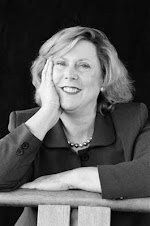
From Wine Lover to Wine Maker: Sierra Foothills' Synapse Wines Makes the Transition

Randy & Debbie Knutzon
How do you get from tasting wines on the consumer side of the table, to pouring wines on the winery side of the table?  The short answer is:  persistence and passion.  The longer answer involves career-switches, determination, experimentation, finances, continuing education, partners, and creativity.

You’ll have your chance to meet a husband-and-wife-team who made this transition during the El Dorado Winery Association Passport Weekends, coming up on April 14-15 and April 21-22
(click here for ticket info).   If you can’t wait until then, go to the Synapse Wines tasting room in Placerville, El Dorado County, to chat with Debbie and Randy Knutzon.   
The journey from one side of the table to the other did take a while. The first time I met Debbie Knutzon of Synapse Wines, she was pouring wine a few years ago at a Sample the Sierra event at South Lake Tahoe.  Her enthusiasm just brimmed over, and she was honest about her wine beginnings.  She noted the help she’d got from more experienced winemakers in the Sierra Foothills, notably John MacCready of Sierra Vista Winery.       

Here’s Debbie’s story:
“ Randy and I moved to Sacramento in 1987.  I had a masters degree in Molecular Biology.  Randy had a brand new medical degree from the University of Iowa, ready to begin his radiology residency at UC Davis.  We were relative newbies to the wine world, however our appreciation for wine soon increased, as did the frequency of our winetasting trips to Napa and Sonoma.
 I don’t recall when or why we made our first winetasting trip to El Dorado County, but once we did we were hooked on the casual atmosphere, beautiful country and delicious wines.  I’m also not sure how I first heard about the Passport Weekends.  The first year, just Randy and I went.   We had a great time – loved the concept.  Although we tried hard, we couldn’t get all of our passport stamps; we missed a few wineries.  So, the second year we went to the Passport Weekend,  we got a few friends together and also a designated driver.  From then on, our Passport Weekend excursion became a looked-forward to event, with friends coming in from out of town, and a limo… 
The Partners: (l-r) Randy, Debbie, Alisa, Bruce
Some years went by – Randy finished his medical training as a neuroradiologist and joined a group in Roseville.  In the spring of 2000 Randy went to a medical meeting in Atlanta.  When he came back, he told me that he had met up with Bruce Ginier who was practicing neuroradiology in Fresno.  Bruce had also done his radiology residency along with Randy.  Randy came home and recapped the meeting…“and by the way – we decided to start a vineyard in El Dorado county”  (or something along those lines)    Basically they had gotten to talking about “wouldn’t it be cool to retire and own a small vineyard / winery”. 
Bruce and his wife, Alisa, really like the foothill region – Alisa has family in northern CA and they had actually recently been up looking at properties in the foothills. Turns out that one of the properties Bruce had been looking at just outside Somerset was a 40 acre parcel with a beautiful south and west exposure sloping down to the canyon of the north fork of the Cosumnes river.  The bad news was that it was raw land – no power, water, roads, or anything.    The good news was that it was not being marketed as “vineyard potential” so the price was right.  
One thing led to another and before we knew it we were having soil samples taken and drawing up a purchase offer contingent on drilling wells and finding water.
Retirement was still a ways off, but since it takes a while to get a vineyard established we boldly charged ahead. We planted our first vines in 2002, - approximately 6 acres of syrah.  The initial plan was to sell the grapes until retirement, but as we got closer to having our first crop we got the winemaking bug and decided to try our hand at it. (Besides that, the market for grapes was pretty much in a trough).  Again, one thing led to another and soon we were building a winery building. 
First Crush!
Our first crush was in 2005 and we made five different styles of Syrah, all the way from a Rose to a dessert wine. 
In 2007 we took out some of the syrah and grafted on Grenache, Mourvedre, Viognier, Petite Sirah and Zinfandel. 
At less than 1000 cases, our annual production is quite small, even by El Dorado standards. We still produce 5 different Syrah-based wines in addition to Zinfandel, Grenache, and Mourvedre. 
April 2010 Tasting Room Opens
The vineyard and winery are quite remote – they lie back on almost 2 miles of steep gravel road, so having an onsite tasting room was not an option.  We chose a site on Main Street in downtown Placerville next to the Cary House Hotel.  We opened up on April 16, 2010. 
Grand Opening May 2011
It’s been a 10 year journey, but we have gone from being consumers of wine to dreaming a dream, developing raw land, becoming grape farmers, becoming winemakers, becoming business owners, and actually getting to pour our wine for consumers to enjoy and purchase!  The learning curve has indeed been steep. 
Even more exciting is that we have finally joined the ranks of the “big boys and girls” of the El Dorado Winery Association.  We are extremely excited to be a part of the 2012 Passport Weekend event.    Life truly is an adventure – never in my wildest dreams would I have imagined that I would one day trade in my research career for one in the wine business. 
We are often asked for the rationale behind our name – Synapse Wines.  As neuroradiologists, Randy and Bruce spend a good chunk of their days looking at nerve cells and the connection between them – the synapse.   Synapse Wines symbolized the connection between the two families to create the vineyard and winery, and also the value that we place on connecting with family, friends, food, and wine.”
(Thanks, Debbie, for a great story!  nb: Barbara Keck)
Visit Debbie, Randy, Bruce and Alisa at the Synapse Wines tasting room,  304 Main Street, Placerville.
The El Dorado Winery Association Passport Weekend offers a lot to see and do.  Plan ahead;  there is a printer-friendly map on the association website, click here to get it.     
Here is the list of participants, click on the winery name to go to their website for more information on the winery background and varietals produced.   Or click here for a short description on the Association website.  Ah yes…. try to line up a designated driver.     

Cab for The Cure: Foothills Wineries Support Important Women's Health Cause


Talk about a good idea that contributes to a good cause -- Holly Dismukes has created a hop-on-the-bandwagon concept that can benefit both wineries and breast cancer research. It’s the “Cabernet For The Cure” event to be held for the third year with the participation of 7 good-hearted wineries in the Fair Play AVA (El Dorado county).

Holly lives near Sacramento, and she says that although she is not in the wine industry, “I absolutely love wine.” She and her husband Brian and her brother Casey Steel have been going to wineries in the Sierra Foothills for 15 years or so. Holly’s job as a staff accountant at Sysco gives her leisure time on weekends to enjoy the wine tourism that’s become such an important part of the Sierra Foothill areas near Sacramento.

The concept development for Cabernet for the Cure was simple. “I’ve been doing the Walk for the Cure for a few years in Sacramento, and so when I go wine tasting in the Foothills, I’ve asked wineries from time to time to donate to the Susan G. Komen cause. Three years ago, Single Leaf, Iverson and Windwalker helped me formalize this idea with the first Cabernet for the Cure event. More wineries join in every year.”

20 – 50 – 150 people and, now, 7 wineries

Holly is not herself a breast cancer survivor, but she believes this is a good thing to be doing for all the women who can be affected. The first year, 20 people showed up. Last year, 50. And now, all 150 “tickets” (tee-shirts) to the afternoon barbeque that keynotes the event at Single Leaf Winery are sold out, ten days before the deadline.

Wine lovers can still participate in the tasting/donation part of the event by asking for a pink ribbon at the tasting rooms of the seven wineries, or by showing a print-out of the poster. The wineries will donate between $2 and $5 a bottle for each bottle of their wine purchased. (Linda Neal of Mellowood, who alerted me to the event, tops the pack by donating $5 per bottle. Atta girl, Linda! Good on you!)

All donations flow through directly to the Susan G. Komen Foundation. What does Holly Dismukes get out of this? Pennies in heaven, I hope.
~~~~~~~~~~~~~~~~~

The participating wineries are Busby Cellars, Iverson Winery, Mellowood Vineyards, Perry Creek Winery, Sierra Oaks Estates, Single Leaf Winery, and Windwalker Vineyard. Click on any of the winery names to go to their websites.
To make your tour to Fair Play easier, here are the winery addresses:


Busby Cellars
6375 Grizzly Flat Rd
Fair Play, CA 95684


Iverson Winery
8061 Perry Creek Road
Fair Play, CA 95684


Mellowood Vineyards
2979 Mellowood Drive
Fair Play, CA 95684


Perry Creek Winery
7400 Perry Creek Rd
Fair Play, CA 95684


Sierra Oaks Estates
6713 Mt. Aukum Rd
Fair Play, CA 95656


Single Leaf Winery
7480 Fairplay Road
Fair Play, CA 95684


Windwalker Vineyard
7360 Perry Creek Rd
Fair Play, CA 95684

What Were They Thinking? My Mom said, "Get A Room..."

What Were They Thinking?
"We had the first customers of the day come to the tasting room, Teri and Rick Girard and they brought a friend along. I’m pouring a glass of my Syrah and my wife Melissa is there with me. The Girards are what I call “alpha customers”. I met them at another winery, and after they came to see us, they started bringing in their whole family to discover us. Our combination of wine and hospitality really resonated with them.
I grew up as a winery brat. My parents dragged me through Napa Valley from the time I was 8 years old. My dad was the controller at Gallo Wine in Modesto. I went to school with the Gallo kids. The first batch of wine I ever saw being made was in a barn in Modesto with a bunch of Greek guys. I was 11. It was awful; really oxidated white wine made from Colombard. When our family moved to Pollock Pines in the late 70’s, we started making a few barrels of wine under our house. In 1988 I took it over with a group of friends as a kind of co-op. When we got to 22 barrels under the house, my mom encouraged us to go get a room.
So that’s what I did. My “room” here at Crystal Basin is bigger this year; we added a space that made it kind of V shaped. This is the first season for the remodeled room. Melissa runs the tasting room, and she really is the face of the winery and has grown the wine club to 1300 members. We’ve been married for 19 years, and we moved to the Sierra Foothills from Silicon Valley in 2006. We’d been making wine at Gold Hill Vineyards in Coloma since 2000 and wanted to see if we could scale it up. We did; from 700 cases to 6500 today.
Not that long ago, Melissa wanted to kill the winery. She thought it was distracting and a boys’ drinking project, which it was. In 2007 she switched horses. Now she’s pretty excited about the bistro that we’re opening; tapas-style. The Girard’s other brother and sister were coming up later that day to help us with the bistro.
We were enjoying this wine right before the big storm hit, and we were all really giddy about seeing the weather show up."


.

Great Headlines: THE SUBTERRANEAN HORROR!

I'm a sucker for great headlines. What writer isn't? And most readers appreciate them too. So when I got this email from Mr LoneHat ( John Thomas, from JJ Cedar Company), who could resist opening it? I'd like to think that John was listening to my brief "how to do better PR" presentation to the El Dorado Wine Grape Growers Association last week, but I think he's just got a natural talent... and I was compelled to read the whole HORROR story! You can too...and thanks, John.

The Subterranean Horror Popillia japonica
Adults surfacing in June/July


Adult Popilliajaponica (Japanese Beetle)


The adult beetles feed on the foliage and fruits of more than 250 kindsof plants, but grape is one of the preferred hosts. The larvae areC-shaped grubs found in the soil, and are serious pests of grass roots.


PCO Choice kills Japanese Beetles andits Larvae. PCO Choice kills the adult insect. The biosolvent influenced cedar oil will dissolve insect egg and larvae by eroding theexoskeleton and cuticle, promoting rapid dehydration. Egg-layer cycles arefurther interrupted by pheromone interference with the insect’soctopamine neuro receptors, and the next generation of arthropod is therebyeliminated.

Because this pest has one generation each year, it may be possible toeradicate them from your vineyards. Creating a 15ft boundary around thevineyard can help stop this subterranean destroyer from re-entering yourplanted areas.

PCO Choice concentrate

For more information contact: jthomas (at) jjcedar.com or visit www.jjcedar.com

How to Promote Wine in an Islamic County: Case Study

Think of this challenge:  You are the manager of a 5-star hotel.  It is located in an Islamic country.  Your guests are both well-heeled locals with petrodollars to spend, and well-heeled tourists from other parts of the world.  You cannot overtly promote your wine list.  Your wine list is really, really good. 

What’s a hotelier to do?  The answer is to rely on word of mouth, and that, in part, is what this blog is about.  If you are anywhere near Muscat, Oman, you MUST go to the Al Bustan Palace and experience their wine and their fabulous food.

Al Bustan Palace at Twilight, courtesy hotel website
Normally an American blogger would not have this opportunity, and so I give my thanks to Steven Holt, Marketing Director - Public Relations for the Ritz Carlton Hotels of Northern California.   With 2 days to spare at the end of an archaeology adventure in Oman, I emailed Steven:  “I understand the Al Bustan is now operated by Ritz.  Who do you know?”

Erika Anggreini, public relations manager, made a visit and tasting possible.  At a table set a few feet from the lapping waves of the azure waters of the Sea of Oman near the hotel’s Al Khiran Terrace restaurant, the assortment of wines presented by Mark Fagan, Beverage Manager, was simply incredible.   “Our wine list changes constantly,” he noted.  It takes a while for us to get inventory here, and our clientele like a wide variety of wine experience.”  For those who do not consume alcohol, the hotel offers sparkling date juice and other interesting beverages.


The surroundings of course were as equally incredible as the wines. 
        
This magnificent hotel is set against a majestic backdrop of rugged mountains with and oasis-like feeling amid 200 acres of lush beachfront landscaping.  It is justifiably known as one of the world’s most luxurious resorts, with a reputation as the “Jewel of the Sultanate,” and has often hosted
visiting heads of state and members of royalty.  This amazing hotel was originally built to host the Gulf Cooperation Council (GCC) Summit in 1985.  The hotel is owned by the Ministry of Tourism of the Sultanate of Oman and has been managed by Ritz-Carlton since mid-2011; general manager is Bernard Viola, who has a 20 year career in the hospitality industry.

Our tasting began with the 2010 Villa Maria Sauvignon Blanc, New Zealand, a popular pour at the resort, particularly with EC guests, noted Mark Fagan.  Redolent of gooseberry, lime and citrus, it is a relaxed wine perfect for beachfront dining.  13.5% alcohol.  The food pairing presented by the culinary team headed by Joergen Sodemann, Executive Chef, was scallops with passionfruit, mushrooms and fennel.

The next wine, which can be found on the hotel’s Bistro wine list is was a Blanc Fume de Pouilly 2005 Dagueneau, from a region 200 miles south of Paris near the Loire valley. Citrus and oak were the predominant taste in this wine, with a touch of pineapple at the side of the palate and a nice minerality.  12.5% alcohol.   200 OMR (Omani Real) the bottle.  (At the time of my visit, one OMR was 2.6 American dollars.)

The 2009 Spy Valley Pinot Noir from Marlborough, New Zealand, is yummy with lots of red fruit, coffee, and chocolate flavors, with nice spice and well integrated tannins.  14.5% alcohol.  Chef Sodemann paired it with a seared tuna with savory spices, and a mango salsa.

In my opinion, seconded by beverage manager Fagan, the best wine of the evening is an Amarone Classico della Valpolicella, Riserva 2003, Verona.  A blend of three types of grapes,  usually Corvina, Rondinella, and Molinara,  it is sweet and dry.  “A King of Red Wines,”   proclaimed Fagan.  This was an excellent wine for the end of the meal. 16% alcohol.

Ending the evening on a sweet note, we enjoyed the 2010 Sauvion “Chemin des Sables” Rosé d’Anjou from France’s Loire Valley.  It’s a blend of  Cabernet Franc, Gamay, Pineau d’Aunis (Chenin Noir), and Grolleau.  Aroma of peach, cherry and strawberry.  Nicely acidic, and semi-sweet.  11% alcohol.

The producer’s website recommends serving this Rosé chilled with Asian foods.

I recommend serving it chilled at the side of the Sea of Oman.

Many thanks to the team at the Al Bustan Palace for hosting what is clearly the most memorable wine event of my life.   When I strike oil, I’m coming back.

Cooper's Hawk makes Wine-Food Pairings Foolproof with Good Results

Making wine accessible, inexpensive and well-paired with good food:  that’s what Cooper’s Hawk restaurants have accomplished.  And if my math is not too bad, I think they bring several million a year to the bottom line too.

My brother claims that he doesn’t know one wine from another.  He does.  He knows if a wine is red, white, pink, or sparkling.   Regardless of this claim, in fact he appreciates when wine and food pair well, and this is what Cooper’s Hawk makes easy. 

I loved the menu.  The wine list is substantial, with at least 30 wines to choose from, all made by Cooper’s Hawk from grapes trucked in from California, Oregon and Washington and a few other states. The 60,000 square foot facility in Southwest suburban Chicago will soon be expanded to 80,000 square feet with a goal of 100,000 square feet.   Current case production is 175-180,000 cases, according to Indianapolis restaurant manager Matthew Kehret.  (The website notes “over 125,000 gallons” a year.)    Indianapolis is one of 6 locations in the Cooper’s Hawk Winery and Restaurants group; more are planned soon for other Indiana and Ohio locations. 

Rob Warren is the primariy winemaker, collaborating with owner Tim McEnery.  Warren’s chops include Kacaba Vineyards in the Niagara region of Canada, and Tarara winery in Virginia.

At the side of each wine on the menu, there is a “bin number”.   On the other pages of the menu – appetizers, main entrees, desserts – are listed brief descriptions of the items on offer, and those items also include a Bin Number.    There is also a Life Balance Menu, part of the group’s recognition of trends in healthy eating.

I chose the “custom tasting” option on the wine list ($15.99).  After my brother and I had decided on our food choices, we looked at the Bin Numbers, and then ordered the wines for the tasting according to the suggested pairings.   The pours, by the way, were generous.   Our pairings:

·         Caesar Salad.  Viognier (bin 76).  A classic new world style Viognier.  13.5% alcohol

·         Caprese Flatbread.  Sauvignon Blanc (bin 78).  A bit metallic to my taste, but not objectionable.   12.5% alcohol

·         Beef tenderloin sliders.  Cabernet Zinfandel (bin 94) .  A blend of 60% cabernet and 40% zinfandel.  Not as hearty as I would have assumed it would be, but a nice drinkable red that’s beef-friendly.  13.5% alcohol.

·         Bacon-wrapped scallops with roasted pineapple and a white rice pilaf.  Gewurztraminer (bin 73).  Nicely sweet but not over the top, and a good pairing.  13.5% alcohol.

Our server presented us with the wine club brochure at a strategic moment, that is to say, after a few glasses of wine.   The wine club has some nice features, such as the ability to earn “points” for every dollar spent at the establishment, and for 350 points you receive a $25 certificate good towards dine-in or carry-out food.   You can choose to join the wine club in four categories:  variety, red, white, sweet.

If you sign up to receive one bottle of Sweet wines each month, you’ll pay $16.99.   For the other categories, it’s $18.99.

So let’s say you join at the $18.99 price.  That’s $228 a year.  (You can cancel at any time, but why would you?  The wine pick-up parties and special events for wine club members are reputed to be great fun!)

With 4000 wine club members in the E. 96th Street, Indianapolis, establishment alone, that’s over $900,000 in revenue yearly.   (And membership keeps growing!   This establishment has only been open for 18 months….).    Let’s say, generously, that the cost of goods sold is about $4 per bottle.  That’s $192,000 a year.     So the wine club brings down to the bottom line OF JUST THIS ONE ESTABLISHMENT, a healthy $700,000.  

Of course there are marketing costs.  But the restaurant was pretty busy and I have a hunch that that operation covers its own expenses, and then some.    The servers are not sommeliers, WSET or other high-priced labor.  There’s a lot of automation in place in assigning tables and calling diners by those vibrating devices that you are given when you check in.  There's a wine tasting area and a gift shop too.

I like this model.  They’ve got a great thing going.  You really need to see the operation for yourself.  It’s a great way to introduce a wine-shy public to the concept of food and wine pairings in a way that guarantees them a nice experience.

I hope to meet Tim McEnery in person someday.  He and wife Dana have created an impressive enterprise since opening their first winer/restaurant in 2005 in Orland Park, IL.    The website doesn’t give me a clue to the name of the enterprise, but I’ll ask him when I meet him.

In the meantime, you too can “meet” Tim virtually at http://www.coopershawkwinery.com/    Go to the PressRoom to see the short video.  Impressive. 

Lakeside Dining with Great Wines at Long Eagle Grille, Hyatt Recency Incline Village

To my mind, there is no lakeside dining quite as beautiful as the Lone Eagle Grille at Hyatt Regency-Incline Village.  It has one of the best wine by the glass lists in the Tahoe region, and I like particularly that they list their wines “from light to full bodied”;  the wine tasting notes below are in that order.  The list changes all the time of course, but here are some that I enjoyed, paired with their exquisite food.  


The Dr. Loosen Riesling 2009 is a bit frizzante and oh so yummy.   At a mere 8.5 percent alcohol,  this popular Riesling comes from the Mosel-Saar-Ruwer area of Germany.  It is vibrant, fruit-driven,  with luscious pear, peach and apple aromas.   Its crisp sweet-tart quality paired nicely with broccolini tempura.  $10/glass, $39/bottle.  

The Lenotti Pinot Grigio 2010, from the Veneto region of Italy  is light and fresh.  You might taste citrus mid-palate, but certainly the minerality is perfect with the pairing of butternut or sweet corn soup.      12.5 percent alcohol.  $10/glass, $39/bottle.

The Talbott “Kali Hart” Chardonnay 2009 , Monterey County, is nice and juicy, fruity and sweet at the finish.  Aroma of mandarin and honeydew, with tastes that hint of pineapple and mango, vanilla and a bit of butter.It is named after the youngest of the Talbott children and that may contribute to its playful personality!  It’s very flavorful, medium-bodied, and perfect with salmon.   14.9 percent alcohol.  $14/glass, $55/bottle.

Davis Bynum Pinot Noir 2009, Russian River Valley, elicited some thoughtful commentary from Lone Eagle wine steward John Marti.   “This represents what I believe is a true California pinot.  It is full bodied, concentrated, featuring balanced and well-focussed fruit.  It is rich and soft, not as spicy as an Oregon pinot.”   Paired beautifully with a panko-coated portobello mushroom.  14.5% alcohol.   $14/glass, $55/bottle.

The Rosso Passo 2009, a Sangiovese and Merlot 50/50 blend from Veneto, Italy, was perfect with the vegetarian dish of wild mushrooms.  It’s an earthy, woodsy, food friendly wine.  12.5% alcohol.   $11/glass, $43/bottle.

The Opolo Summit Creek Zinfandel 2009 just has a big YUM beside it on my tasting notes.  I adore Opolo wines, and Lone Eagle has a great selection of them.  They paired it with a chocolate duo, and what’s not to love?  15.6 percent alcohol, so take it slow.  $13/glass, $51/bottle.

Another big YUM for the Educated Guess Cabernet Sauvignon 2009, a beautifully balanced wine that is incredible every year.  Paired with a buffalo tenderloin.  14.5 percent alcohol.  $16/glass, $61/bottle.

The Lone Eagle Grille is located at 111 Country Club Drive, Incline Village, Nevada, USA 89451.  Tel 775.886.6899